
The History of the Slade Professors
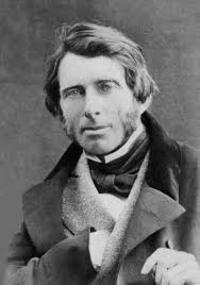
In 1869, the Slade Lectures were founded in pursuance of the will of art collector and philanthropist Felix Slade. Slade left his collections to the nation, and founded chairs of fine art at Oxford, Cambridge and University College London. John Ruskin (pictured right) was the first Slade Professor of Fine Art in Oxford, and gave the first series of eight public lectures in 1870. In his inaugural lecture, he announced that he was setting up the Ruskin School of Drawing, which is now the Ruskin School of Art.
Each year, the Department of History of Art plays host to the Slade Professor of Fine Art, who is always a figure of international standing in the study of the visual arts. The annual lecture series continues to focus on art historical topics, and takes place in weeks 1-8 in Hilary Term. The list of previous lectures can be found here.
Where available, previous podcasts of Slade Lectures are available to listen here.
Recent Slade Lectures

'Urban Change and Representation' by Esther da Costa Meyer, Hilary Term 2026
How do we know what we know about cities? Enmeshed in transnational networks, cities are always in flux, subject to constant social, cultural, and economic change. The history of architecture relies on documents––texts, images, maps––that are never value free and largely reflect the points of view of those in power. Moreover, every year lost sources come to light, troubling and sometimes contradicting our interpretations and engendering new perspectives. Contemporary scholarship requires that we reassess our tools, include other voices, analyze spatial inequalities and the ways diverse populations experienced urban space. Focusing on cities in different continents, from the nineteenth century to the present day, these lectures will probe the political and ideological implications embedded in our carefully curated architectural histories and methodologies.
Image credit: Nelson Kon

'Gaps' by Professor Beate Fricke, Hilary Term 2025
In writing history, the things that we do not know rarely play a starring role. These gaps in documentation about the past – blank spots in the material record and the archival apparatus – might all too easily be taken as indexes of moments in which nothing much happened. But from another perspective they are the sea surrounding what are truly infinitesimal islands of knowledge or the connective tissue that forms the basis for historical arguments about the fragmented forms of the past. These lectures attempt to recast the gap in this way, reframing assumptions and speculation as the normative condition of history writing rather than its aberration. And it seeks to expand from historical and historiographic notions of the gap to see the chasm, separation, schism, absence, and void within the objects of the past that we study and as central to their visual and material operations.
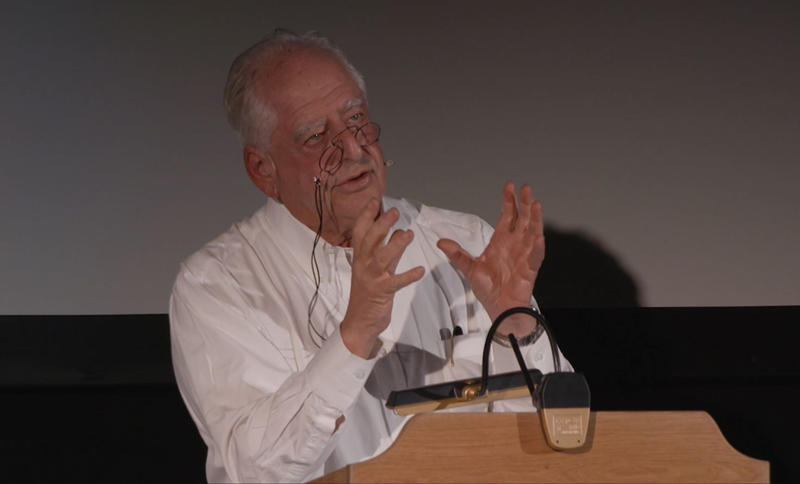
'A Natural History Of The Studio' by William Kentridge, Hilary Term 2024

